

Don't Get Bagged in Queens
A Canadian in jail, a cop who hates snitching, and a look at NYC’s senseless graffiti laws.


Last summer, I took a nine hour Megabus bus from Montreal to New York City, where my friend Allee had offered me a couch to sleep on. I was subletting a cheap room in Montreal, where I was enjoying a lazy, unemployed summer. In New York, I did much of the same, spending days aimlessly wandering and nights drinking beer in nearby Maria Hernandez Park. On Saturday, I went to a block party hosted by Brigade USA with my friend Lei. An hour or so into the outdoor festivities, I noticed someone painting a throwie—a bubble-lettered spelling of one’s graffiti tag—on a garage door across the street, a little bit away from the crowd. I pointed it out to Lei, and asked if he recognized the tag. He said he was unfamiliar, but added that most graffiti writers wouldn’t hit up like that on a busy street in broad daylight.
I didn’t get it: on a block filled with people drinking and dancing in the street, in a city synonymous with graffiti, how could it not be chill? In the two months I had just spent in Montreal, I saw people doing graffiti quite brazenly on multiple occasions. Though Montreal largely embraces graffiti culture, getting caught can still result in community service, or a ticket upwards of one thousand dollars. Lei explained that the NYPD is notoriously strict on vandalism, and that spending a night, or even a weekend in jail was not uncommon for writers in the city. He stressed that if I planned to do any graffiti while I was here, I needed to avoid getting bagged in Queens. As a Canadian somewhat naïve to the American judicial system, I wasn’t entirely sure what he meant by “the tombs,” or what a “district attorney” was, but I certainly wasn’t planning on getting caught in any borough.


Though I wouldn’t claim to participate in graffiti at any sort of high level, the history and culture of the art form has fascinated me since I was young. Through skateboarding in my teenage years, I met a number of graffiti writers in my hometown of Victoria, a small city on Canada’s West Coast, and even began to throw up some toy handstyles of my own—a habit that, at the age of 26, I had still not kicked.
Artistic merits aside, I was always fascinated by the declaration of “I was here” contained within every tag, a bluntly-human impulse to be recognized and remembered. Immersing oneself in the culture transforms the streets into an international easter-egg hunt—every tagged mailbox, wall, and back-alley becomes a guestbook of sorts, intricately signed by a like-minded community. Even walking through New York, I had spotted tags from friends back home etched into the glass of subway station windows, or spray-painted on rolldown gates in the Lower East Side. Perhaps what I like about it is the sense of familiarity it brings, similar to spotting a friend’s face in a crowd of strangers. Or maybe it’s just the beauty of knowing that you and someone you know have both been in the same grimy bathroom stall.
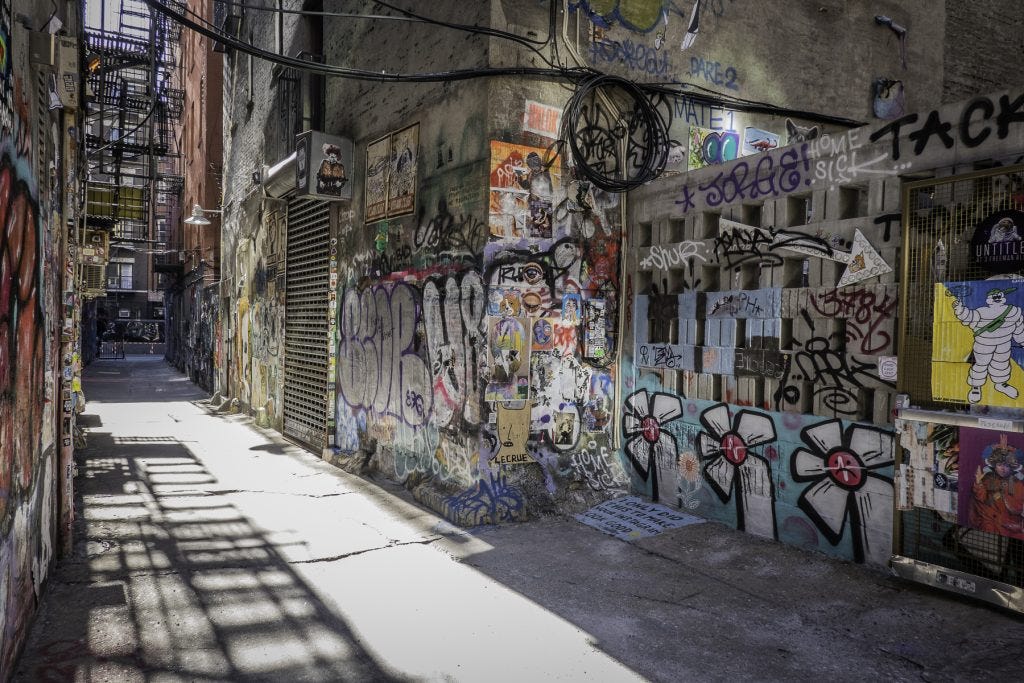
The day before my bus back to Montreal, I spent the evening hours walking around Brooklyn alone, stopping occasionally to buy another tall can, slap up a sticker, or write on a dumpster. I like to imagine that someone I know will one day find one of my tags on their travels, and experience the same thrill that I do. A little past midnight, I made my way back to Allee’s place with Chief Keef’s Almighty So 2 blasting in my headphones.
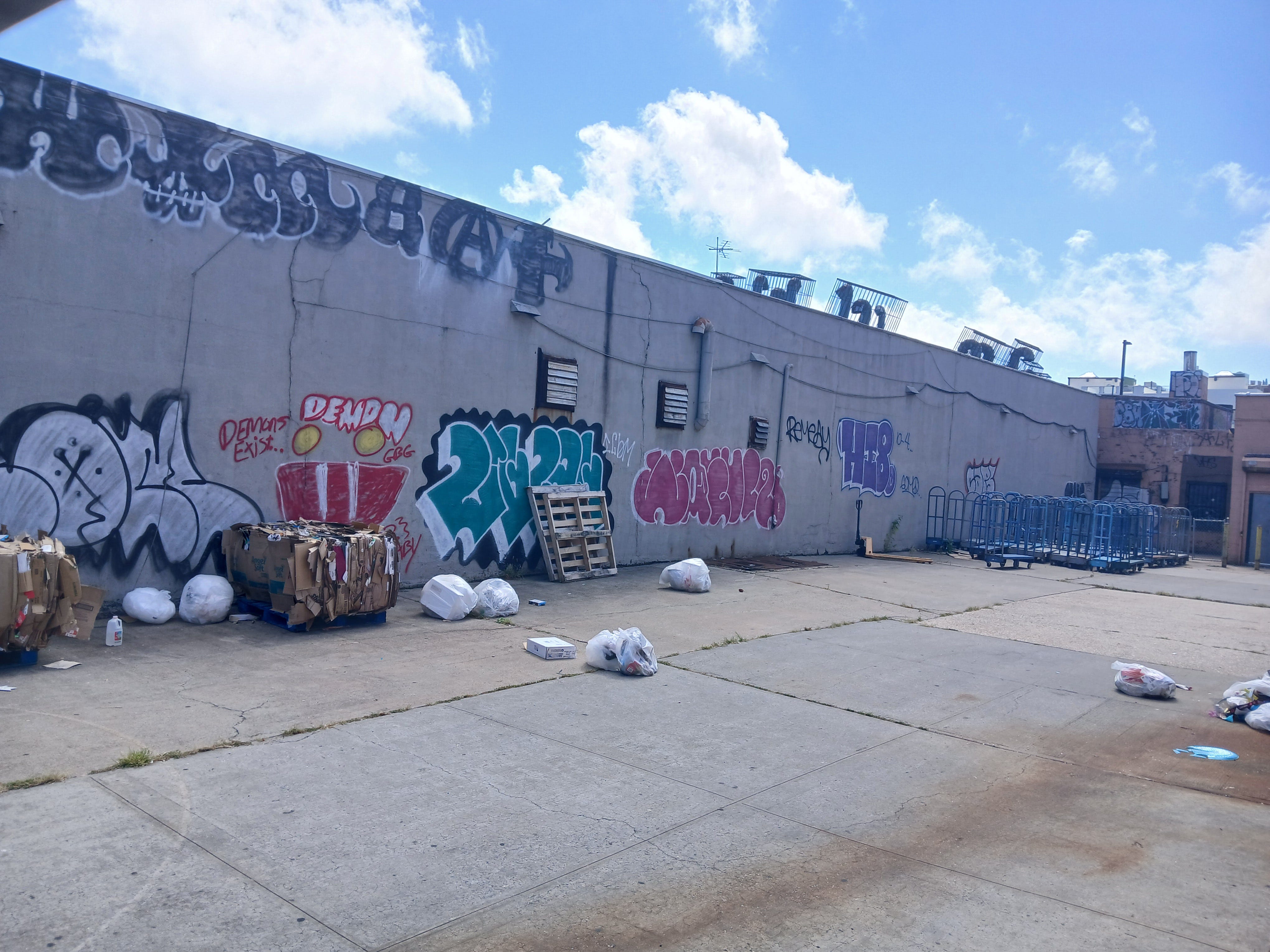
Minutes away from her front stoop, I stopped in a parking lot where I admired fill-ins from NYC heavy hitters Wombat and ZigZag. I snapped a photo of the wall, eyed a rolldown gate on the sidewalk, and pulled out a Presto whiteout pen to add a small signature of my own. Through my headphones, I heard a shout. Something along the lines of “You’re under arrest.” I turned around and saw three officers hopping out of an unmarked vehicle.
I figured I had to play the innocent tourist card—convince them that I, a Canadian, had no idea it was really that bad. There’s graffiti everywhere in New York, right? I offered them my markers, and assured them that I’d never do it again, lesson learned. I was leaving for Canada the next day, anyway. They told me that I would need to speak to a judge, and that since I was a “flight risk,” I would have to stay in custody until that happened. We stood there, waiting for a transportation vehicle to bring me back to the station for processing.
Since the scene of the crime was just off the corner of Myrtle and Wyckoff, we were technically on the border of Ridgewood and Bushwick. Ridgewood is technically in Queens, and the officers that arrested me were serving the Ridgewood 104th Precinct.
So technically, I had just gotten bagged in Queens. Sorry Lei.
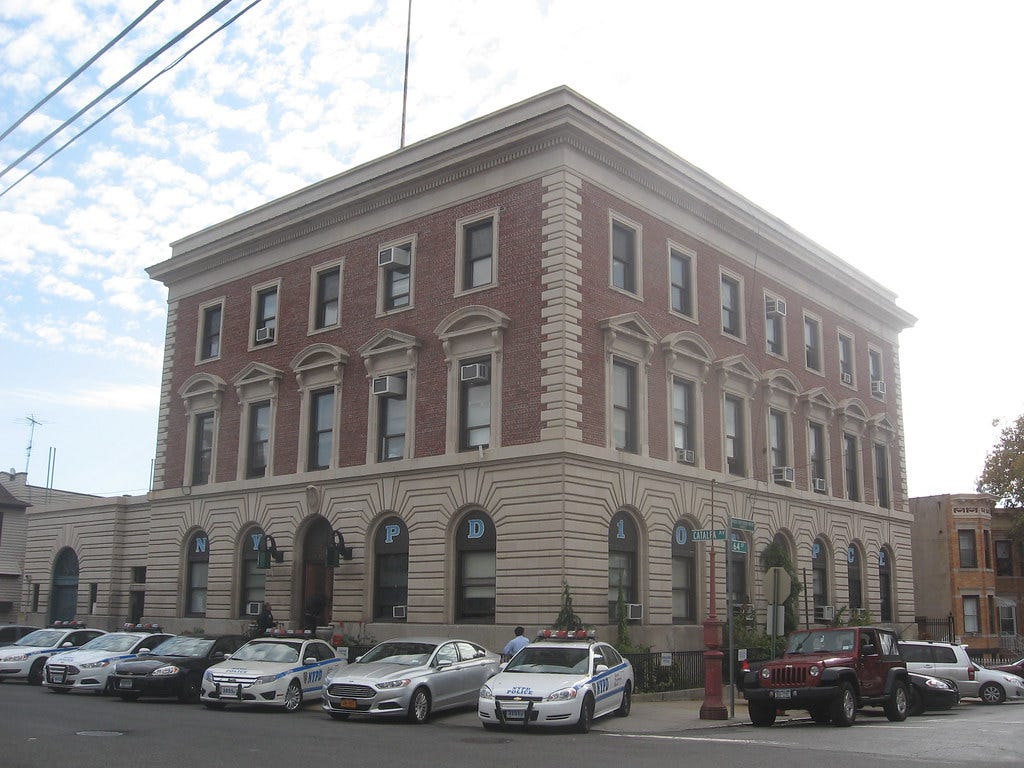
Inside the precinct, I was led to a small holding cell with two other men sitting silently on a small bench. I took the floor. While the rest of the force dicked around and watched TikToks on their phones in the lobby outside, one of the officers that arrested me sat in the room with us. Clearly bored with his assigned task of doing nothing, he eventually broke the silence by asking me the most pressing question of Summer 2024:
“Yo Canadian, Drake or Kendrick?”
I told him that I thought Kendrick won the beef. He seemed shocked that I was not rocking with the 6 God. I told him I don’t really care much about Drake (outside of Take Care) or Toronto, and that I grew up on the West Coast, much closer in proximity to Los Angeles. I asked him what he thought of 6ix9ine. He answered that he doesn’t listen to him anymore, since he snitched. I laughed, and reminded him that he was a police officer speaking on the street politics of snitching. He said that didn’t matter. He also said that there was a Canadian rapper currently locked up that he thinks should be free.
“Man…you’re not talking about Tory Lanez, are you?”
He was talking about Tory Lanez.
He started to tell me how Tory didn’t shoot Meg. I tried to move past this, and switched the topic to his favorite rapper in New York (Cash Cobain). I asked if he liked Xaviersobased. He hadn’t heard of him, but said he’d play a song. I told him to look up “Special.”
The jerk music echoing through the cell from the officer's phone speaker seemed to perk up the middle aged Hawaiian man sitting behind me.. He started telling the officer about some stupid conscious lyrical Australian rap, trying to get him to play a song. Later in the night, I found out that the Hawaiian guy was arrested for a domestic dispute with his wife which occurred in front of their developmentally disabled children. He told me that his wife would likely divorce him after this, and that he would probably have to move back in with his parents in Hawaii.
Around 2 a.m., I was taken out of the precinct cell and handcuffed again, before I was driven to Queens Central Booking. The cops explained that I was lucky it was a Sunday night, and that court would open back up at 7:30. They assured me I would make it out in time to catch my Monday evening bus back to Montreal, which departed from the Port Authority at 9PM.
Once we arrived at Central Booking, I was brought down a long hallway to a large cell with a single toilet in the corner. The A/C was cranked, even though nearly everyone in the room had been picked up in shorts and a T-shirt. There were a few benches, all taken by people lying down in uncomfortable positions, scrounging for sleep. I chose an unoccupied spot on the cell floor that didn’t look too dirty, and followed the lead of everyone else, wrapping my hands around my body inside my shirt for warmth, and pulling my t-shirt over my face to block out the bright fluorescent lights overhead.
In the morning, I found out that the court actually opened at 9:30–not 7:30, like I was told by the police. Since the court was only open on weekdays, there was a backlog of people who had been sitting there all weekend who would need to be processed before I could. Come 9:30, we were moved down the hallway, and sorted into cells based on our charges: misdemeanors in one, felonies in the other. Looking at the felony cell across from us, I was thankful that my charges of “criminal mischief” and “making graffiti” were misdemeanors in the state of New York.
People inside our cell passed the time by socializing, telling stories, and asking each other what they were in for. Aside from myself, most people seemed to be in for something violent.
Notable characters:
A man who claimed to work as private security, who had beaten someone up during an argument that started over some french fries.
He was the first person I spoke to in the morning—we were both frustrated by the guy who had been screaming the entire night. He spoke up first, politely suggesting that the offender “shut the fuck up.” He continued screaming, and I reminded him that people were trying to sleep. He responded with a vague threat of violence towards me, which caused my new friend in the private security field to stand up. There was a break from screaming after that.
Jay, a middle aged Spanish guy who claimed he was in for slapping his neighbor who had “falsely” accused him of stealing packages.
He had clearly been to Central Booking a number of times before, and was giving rookies the rundown on how everything was going to go. Through Jay, I learned that the corrections officers (COs) came by every hour on the hour with a list of names, and if your name was called, you would be moved to the “lawyer room” where you could speak to your lawyer or public defender. He said if your name wasn’t called by 10PM, you wouldn’t be making it to court that day.
A short guy with dreadlocks who was visibly shook.
I could tell he was on the verge of tears when he walked in. I asked him what happened, and he told me that this was the third violation of his probation, meaning that he would have to serve the remaining three years of his sentence in prison. He said that he might have to kill himself. I hope he didn’t.
As it became clear that I might not be making it to the Port Authority for my bus at 9PM, I realized that I had to notify a few people of my upcoming travel delays. The only phone number I know is my dad’s cell phone. After waiting my turn, I reached for the receiver hanging on the wall, when a voice called out from behind me: “Yo Canadian, who you calling?”
A tall guy who I had spoken to earlier explained that the phone could only call New York City area codes. He said that if I needed to contact my dad, he could call his friend, who would then add his number to a three way call before hanging up.
I explained to my dad what happened, instructed him to forward this information to Allee, and told him that I didn’t know when I’d be getting out. I said I would keep him updated and check back in later.
The next hour, on the dot, the tall guy who called his friend for me was called by a CO. At this point, he had been in longer than everyone else, by far. The cell erupted with whoops and hollers. Even though my name hadn’t been called, I was immensely happy for him. He had already been inside for two full days, and had gone out of his way to make sure I could get a line to the outside world that I wouldn’t have had otherwise.
The CO grew impatient as all of us took turns dapping him up. After the names of the hour left our line of sight, it sunk in that I had just lost my line to my dad. I started to panic, realizing not only that I wouldn’t be able to make any more phone calls, but that I might not even be leaving central booking tonight if my name wasn’t called soon.
My increasing level of silent anxiety was interrupted when a CO approached the barred gate of our cell.
“Alright, who’s the Canadian white boy?” (I was not just the sole Canadian, but also the sole white boy.)
The CO handed me a strip of paper with a phone number on it.
“This is from your friend that just left. He said you might need it.”
I sat back down on the bench, taking a moment to ensure I didn’t cry in jail.
At this point, most of the people I befriended had gotten called, and I had now been there longer than nearly all of the unfamiliar faces around me. Even a few people that had shown up hours later than I did had already moved on. If my name wasn’t called this time or the next, I would be staying for another night. I had kept it together thus far, but the increasingly real possibility of sleeping on the dirty floor of the misdemeanor cell for a second night had me inching towards a mental breakdown.
The next hour, a CO showed up with a small stack of names–potentially the last of the evening. I began to pray. I had not prayed in years, but if there was ever a time, this was it.
The CO called my name.
I was led into another dirty cell, filled with people whose names had been called hours prior. I spoke to the familiar faces. Jay explained to me that being in this room meant that we would see a judge tonight, and that the court closed at 1 AM. He also explained that a lot of porn stars are also escorts, and that he follows them on Instagram to see when they’re in New York City, so he can pay to have sex with them. He bragged about all the expensive things he owns, and all the pairs of designer shoes he wears. But we were in jail. His shoes didn’t have shoelaces in them, and neither did mine.
As I stood around waiting to get called into the tiny room where a public defendant would speak to you, a CO opened the cell door, and called my name.
“The district attorney dismissed your case. You’re good to go.”
Without needing to speak to the lawyer or judge, I was led through the final hallways of the facility, where a police officer explained that my charges had been dropped, and that I could return to the precinct to collect my belongings. They offered me a ticket for free transit, but without my phone to tell me where I was or how to get to a bus or train, this was useless.
Finally outside and breathing fresh air, I picked a direction and ran, laceless shoes loose on my feet. I flagged down the first taxi I saw, and hopped in. I had $27 USD in my wallet, which was the only item I was allowed to keep with me. I told the driver I needed to get to the 104th Precinct, which he said would cost $25.
Back at the 104th, a shift change had begun. Police officers were socializing, sipping energy drinks, and showing each other more TikToks. An old Italian woman sitting beside me told me that this was the third time she’d been here today, and that nobody had helped her yet.
After an hour and at least five conversations with distracted officers, one of them opened a drawer, handed me a bag containing most of my belongings, and walked away. I tracked him down again, and asked why my watch and gold chain weren’t in the bag. For a moment, he feigned confusion. Then he re-opened the drawer and begrudgingly returned my jewelry.
With my phone, I was finally able to direct myself back to Allee’s place around midnight. After a debriefing of my past 24 hours, I learned that both her and her roommate, Amanda, had similar stories of arrests.
The next month, I returned to NYC from Montreal: a redemption visit of sorts. This would include my first MLB game (Mets vs. A’s) instead of my first visit to jail.
After a devastating Mets loss at Citi Field, Allee and I went back to her place in Ridgewood, where her roommate Amanda had just returned from out of state. I hadn’t seen her the last time I visited, but learned that she was into graffiti, so naturally, the topic came up quickly.
“I heard you got pinched,” she said. “104th Precinct?”
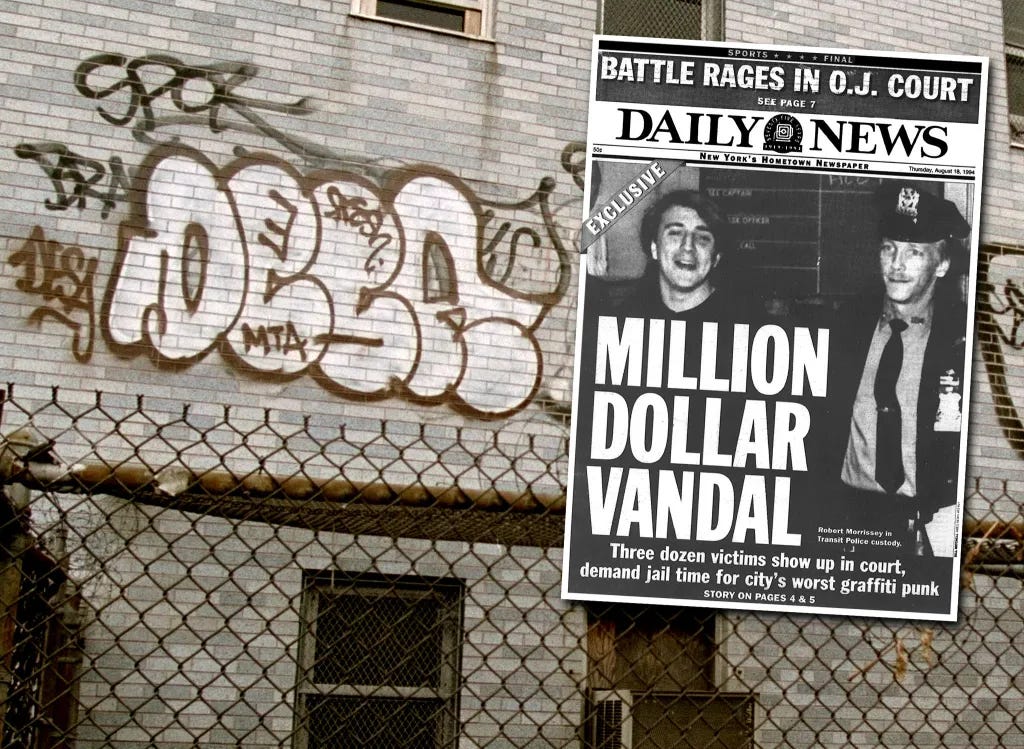
The 104th in particular, I learned, was notorious for going after graffiti writers, and was the same precinct responsible for many of the charges which in 1994, earned legendary graffiti writer Desa MTA the title of the “Million Dollar Vandal”.
As we got into further graffiti talk, I explained to Amanda that I didn’t plan on catching any tags in New York this time around. She asked if I had checked out the nearby train-yard yet. It would probably be chill, she assured me, and said that the chances of running into any rail cops was pretty low.
Walking down the train tracks the next morning, I spotted two figures with backpacks on. Graffiti writers for sure. As I got closer, one of them greeted me with a phrase uttered countless times in train yards worldwide:
“What do you write?”
He introduced himself as Sokem. I told him I was pretty sure I had seen it before.
“I hope so,” he laughed.
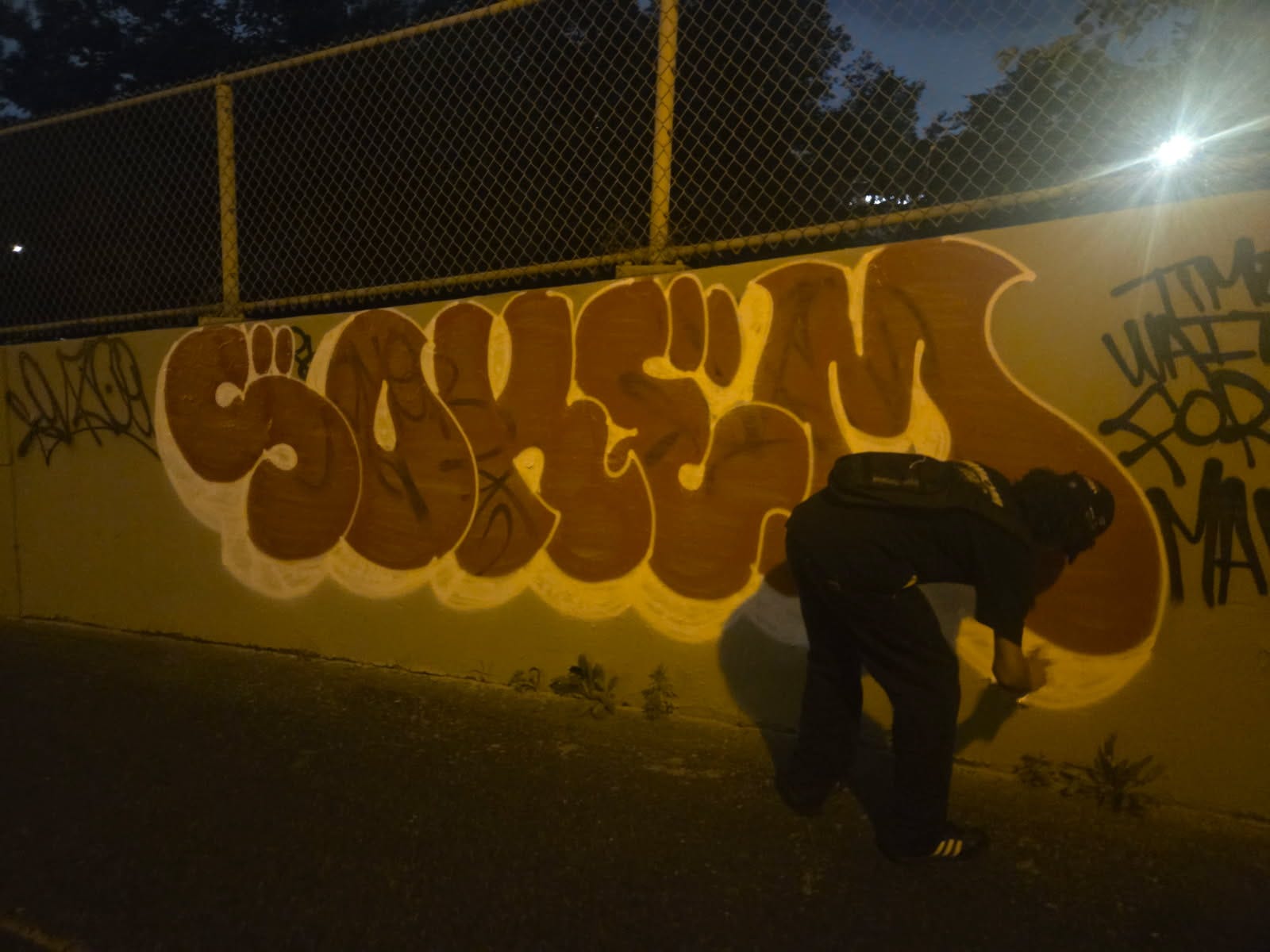
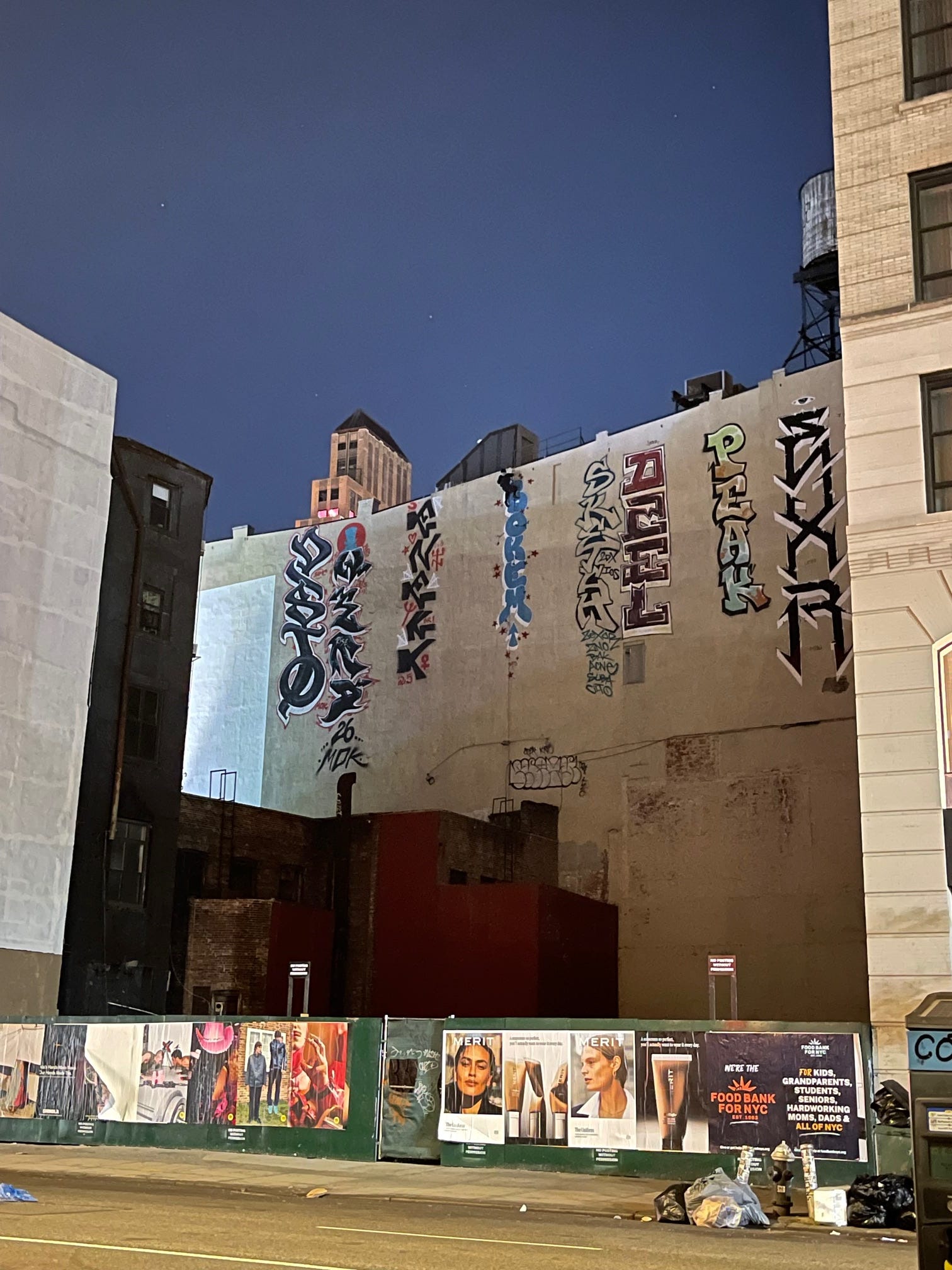
Over the past few years, Sokem has been on the forefront of the rappelling graffiti scene in New York City, using rock-climbing gear to hang from the sides of bridges and buildings hundreds of feet in the air to paint spots.
Though rappelling graffiti has been around for decades, it was typically employed by writers with rock-climbing experience, and only performed in a few regional scenes (with notable historic examples such as the KID PK water tower). Recently, though, rappelling graffiti has exploded across social media, with writers like Sokem, Rams, Notice, and Qzar pushing the limits of graffiti, and hitting spots once thought to be untouchable.
In addition to being a well-rounded, active graffiti writer, Sokem has done as much research as he can on the system that has been prosecuting artists for longer than he’s been alive.
Over the phone later, Sokem explained that getting sent to central booking is a common occurrence amongst graffiti writers, but also a good sign that your case will get thrown out.
“I’ve had out of town homies come here and get bagged, I’ve had homies that live here get bagged. It’s like a never-ending cycle, but the city never prosecutes it,” he said. “There’s no reason anyone should be doing 1 to 3 days for graffiti, but if you’re in a borough that’s more residential, they’re just gonna fuck your shit up. Queens is like a whole other thing. They’re not nice out there. It’s not just about getting the arrest.”
He suggested that the police held me until I could see a judge as a way to make my night worse, knowing that my charges would be eventually thrown out.
For enduring graffiti writers like Sokem, run-ins with the law become merely a part of the eternal game of cat and mouse–inevitable as a skateboarder breaking a bone. Before hanging up, I ask him what motivates him to keep going, regardless of legal troubles and the craziness that comes with painting in the city.
“I just love it. It’s just something that I do at this point. I think about graffiti all day. It plays into every relationship I have, every friendship that I have. I can’t go anywhere without drawing, or scratching my name into some bullshit. I don’t know what keeps me motivated–I just like to paint. It makes me happy. Nothing else exists when I’m painting. I’m present, I’m there. It’s therapeutic. I feel like I’m James Bond sometimes.”
In the same way that it took little convincing for me to hop a fence into a train yard in the exact neighborhood I had been arrested in a month prior, there’s something that keeps everyone coming back. In the police cruiser on my way to booking, I had asked the officer if he had any memorable stories of catching graffiti writers. Rather than any exciting chases or high-profile busts, he told me about a story about catching the same guy on multiple occasions–a graffiti writer with a professional career as a dentist.
I guess the thrill is universal. Just keep your head on a swivel when you’re in Queens.
 |
|
sounds like he got bagged in queens
This is incredibly well done.